Zoology of the Future was a traveling museum exhibit adapted from Dougal Dixon's 1981 book After Man: A Zoology of the Future. It used dioramas and animatronics to portray the book's animals and environments. Developed by the Japanese exhibit design company NOMURA Co.,1 it went on display in Japan and the United States.
History
Little is known about the development of this exhibit, only that it was initially developed by NOMURA Co., a major exhibit design company in Japan.1,2 It was on display in Japan in 1984, debuting at the Shinjuku Keio Department Store,1 and then went on to tour the United States from 1985 to 1992.
After 1987, the original organizers found that the exhibit was failing to turn profits. The exhibit materials were sold to Dinamation, a company famous for making animatronic dinosaur statues for museums and zoos.3 In Dixon's words, they "turned it into a freak show".4 In the second half of 1991, the Desert Leaper and Night Stalker animatronics were on display at the San Diego Wild Animal Park (now the San Diego Zoo Safari Park), in an exhibit called The Wild Woods: From Dinos to Rhinos.5,6 This exhibit included numerous animatronic dinosaurs and prehistoric mammals created by Dinamation.5 The two future creatures were then reunited with the After Man exhibit material for a showing in the Science Museum of Western Virginia, which as far as I've found is the last time the exhibit was on display. After that, the animatronics were brought back to San Diego for the reopening of From Dinos to Rhinos in summer 1992. That closed on September 7.7 What happened to the animatronics, or any of the exhibit material, after Dinamation's collapse in the late 1990's/early 2000's is unknown, but it is known that many of Dinamation's animatronics (which weren't on loan at the time) ended up scrapped.
Chronology
August 3 - 15, 1984: Shinjuku Keio Department Store, Shinjuku, Tokyo, Japan1
ca. October 1986 - January 4, 1987: Museum of Science, Boston, Massachusetts8,9 Under the name Future Zoo.
February 6 - May 3, 1986: Denver Museum of Nature and Science, Denver, Colorado10
June 5 - September 7, 1987: California Academy of Sciences, San Francisco, California1,11
ca. January - April 30, 1989: Orlando Science Center, Orlando, Florida12 Under the name Creatures of the Future.
Summer - Fall 1991: San Diego Zoo Safari Park, San Diego, California5 Animatronics only, as part of The Wild Woods: From Dinos to Rhinos.
January 17 - April 12, 1992: Science Museum of Western Virginia, Roanoke, Virginia3
Summer - September 7, 1992: San Diego Zoo Safari Park, San Diego, California7 Animatronics only, as part of The Wild Woods: From Dinos to Rhinos.
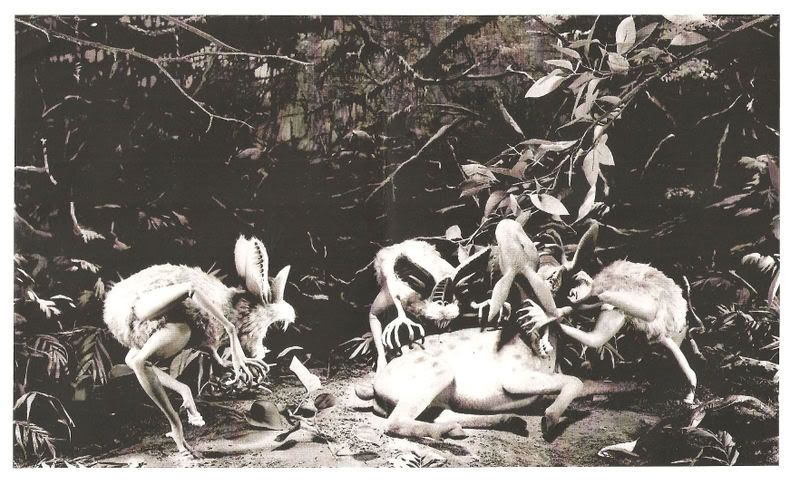
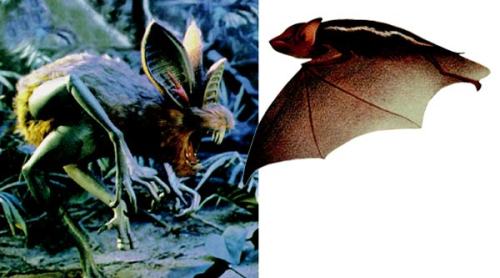
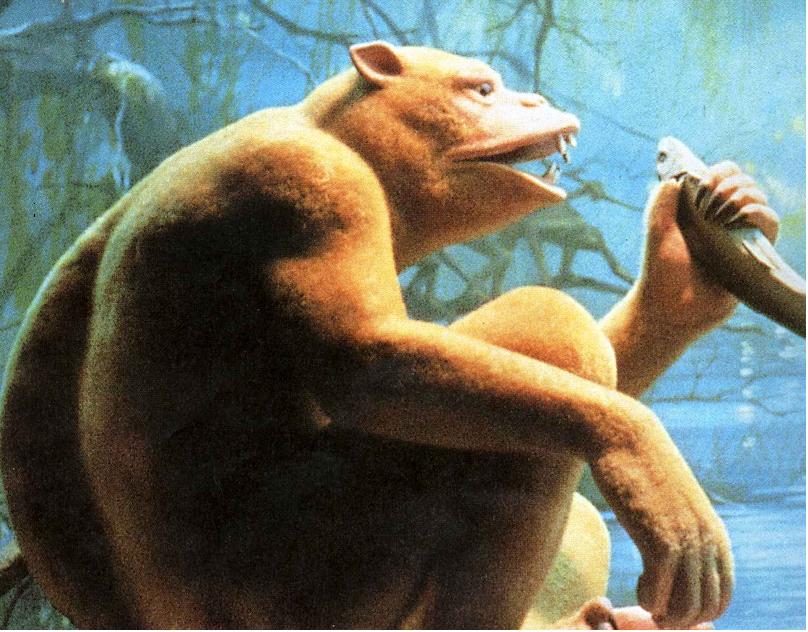
Night Stalker diorama
Layout
The exhibit started with visitors walking through a "time tunnel", with light and sound effects simulating the travel back in time.2 Following this, a four-foot-tall globe on a pedestal showed what the continents would look like in 50 million years, accompanied by an audio recording of Dixon himself discussing evolution.9 19 miniature dioramas, arranged by biome, recreated the illustrations from the book. At the Shinjuku Keio Department Store, these were:1
Temperate Woodlands and Grasslands
Falanx, Rabbuck
Oakleaf Toad, Testadon
Tusked Mole
Truteal
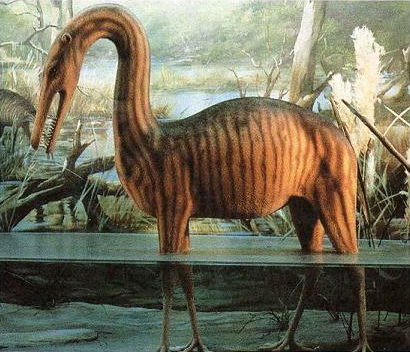
Reedstilt (right)
Coniferous Forests
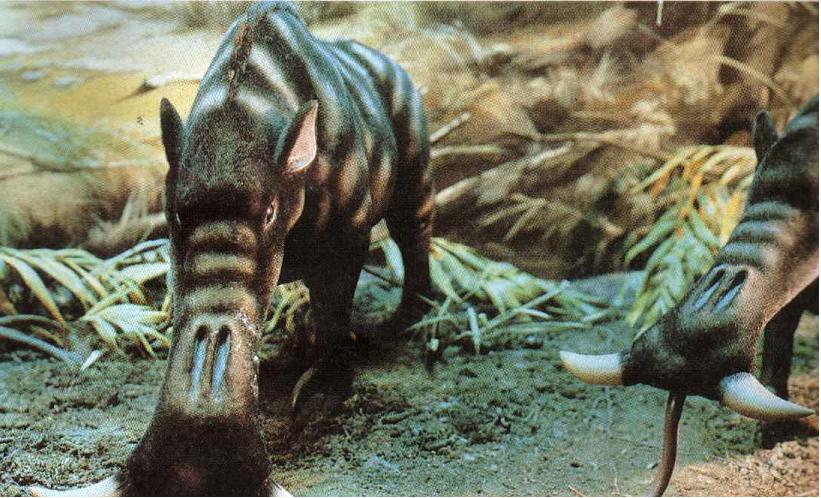
Water Hornhead
Tundra and Polar Regions
Bardelot, Woolly Gigantelope
Distarterops
Deserts: The Arid Lands
Desert Shark, Fin Lizard, Rootsucker
Tropical Grasslands
Gigantelope, Long-Necked Gigantelope, Rundihorn
Horrane, Raboon
Tropical Forests
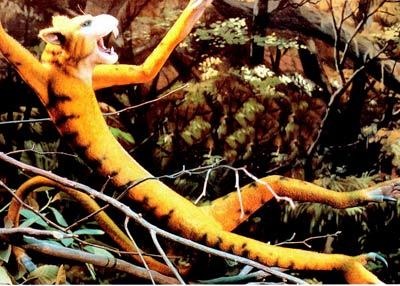
Khiffah, Striger
Swimming Monkey
Mud-Gulper, Swimming Ant-Eater
Turmi (right)
Giantala, Hiri-Hiri, Slobber
Islands and Island Continents
Nightglider
Flower-Faced Potoo
Night Stalker
The Wilmington Town Crier mentions the Zarander8 (possibly sharing the Turmi diorama?), and the newsletter of the California Academy of Sciences also mentions the Vortex11 (possibly sharing the Distarterops diorama?).
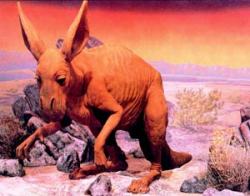
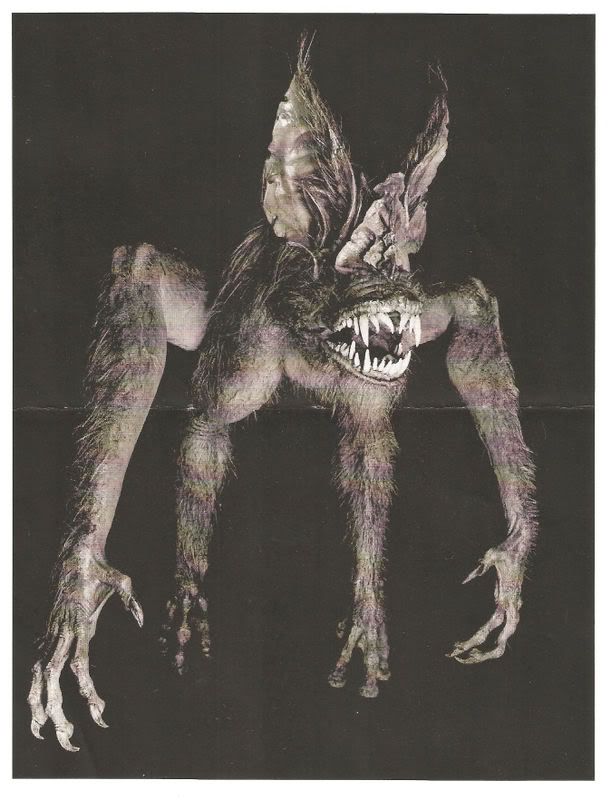
These dioramas were supplemented by videos, sounds, graphics, and the two animatronics.1,9 The Desert Leaper animatronic was nine feet long2 and six feet tall.11 It was placed in the Desert section at Shinjuku1 and at the entry of the exhibit in Boston, where a video demonstrated its movements and its ability to hydrate itself.9 In San Francisco, the Desert Leaper's display was littered with coins, from people trying to toss a coin into its mouth.13 The Night Stalker animatronic was outfitted with a speaker that played sound effects - evidently sourced from Gaira, one of the titular kaiju in the film War of the Gargantuas (1966).14 The Orlando Sentinel also mentioned an animatronic Woolly Gigantelope,12 which may have been a later addition by Dinamation, but I have found no independent confirmation of this third animatronic's existence.
At the end of the exhibit, at least when it was in Shinjuku, was a section called "Dr. Dixon's Laboratory". This area featured panels demonstrating the history of life, climate change, and how organisms evolve, as well as sketches, models, and documents relating to the development of the book.1 In Boston, a series of Dixon's pencil sketches (including the Ghole, Parashrew, Rundihorn, and Slobber) were displayed at the exhibit entrance, outside the Time Tunnel.8 In Denver, a postscript to the exhibit featured an illustration of Dixon's speculative human descendant, previously featured in the article "Visions of Man Evolved" for Omni Magazine.10
At the California Academy of Sciences, the exhibit filled the Hohfeld and Lovell White Halls.11
Gallery
Images
Creatures
Desert Leaper animatronic
Distarterops
Horrane
Night Stalker diorama close-up. That other bat image is not a creature from After Man; I don't know where it came from
Night Stalker animatronic
Striger
Swimming Monkey
Promotional material and photos
Promotional poster, Shinjuku Keio Department Store (front) ca. August 1984
Promotional poster, Shinjuku Keio Department Store (back) ca. August 1984
Promo, Shinjuku Keio Department Store ca. August 1984
Dougal Dixon with the Desert Leaper animatronic and a Night Stalker puppet(?) draped on his shoulder, at the California Academy of Sciences Photo by John Storey, via Getty Images June 8, 1987
Dougal Dixon with the Desert Leaper animatronic and a Night Stalker puppet(?) draped on his shoulder, at the California Academy of Sciences Photo by John Storey, via Getty Images June 8, 1987
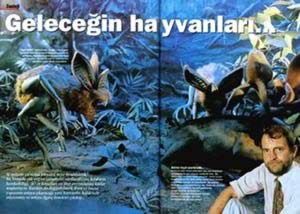
Advertisement in a Turkish magazine
Spread in a French magazine
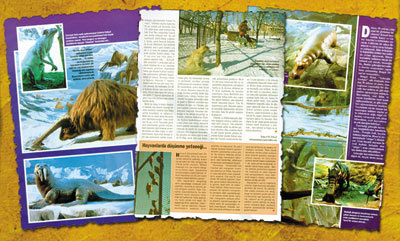
Spread in a magazine that's far too blurry to read
Video
Promotional video produced by Dinamation. Includes footage of the After Man exhibit. ca. 1980s
CNN news broadcast covering the opening of Zoology of the Future at the California Academy of Sciences. June 1987
For some inexplicable reason, footage of the exhibit (seemingly taken from a news broadcast when it was in Japan) is included in this stoner video discovered in the depths of YouTube. ca. 1984?
Home video of the From Rhinos to Dinos exhibit at the San Diego Wild Animal Park, featuring the Night Stalker animatronic. Uploaded by Paul Emus ca. 1991-1992
Home video of the From Rhinos to Dinos exhibit at the San Diego Wild Animal Park, featuring the Desert Leaper animatronic. Uploaded by rdgem 1991
References
"I found myself repeatedly glancing behind me to the life-size model of the Giant Desert Leaper (Had it moved? Were its eyes in a different position? Was it ready to pounce?) I felt only marginally assured that the Leaper is an herbivore (plant-eater). It might like a change of diet, after all." Jim Rouillard, 19868
Promotional poster for Zoology of the Future (front, back), 1984.
"Big Summer Show Takes Visitors to a World 50 Million Years Away In "Zoology of the Future" Opening June 5". The Academy Newsletter June 1986: 1.
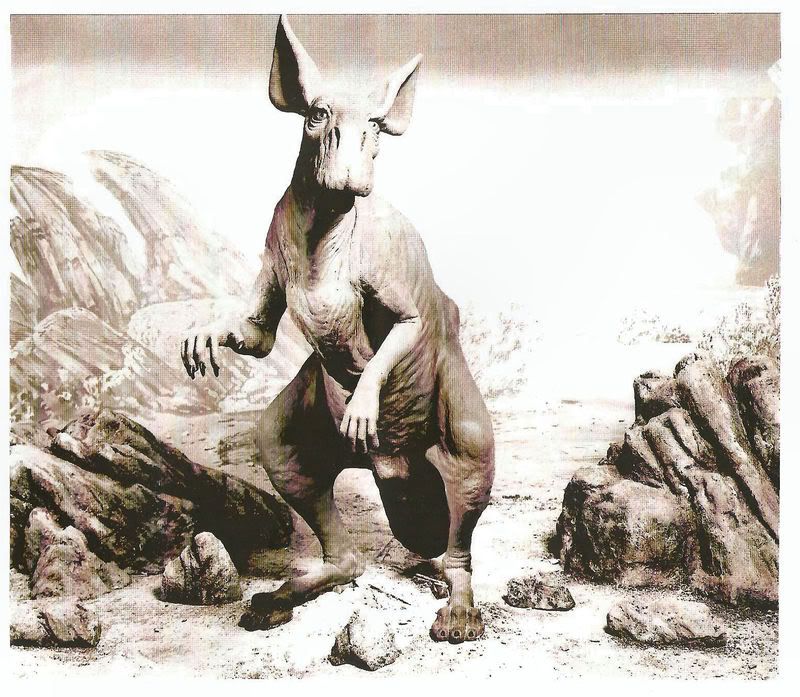
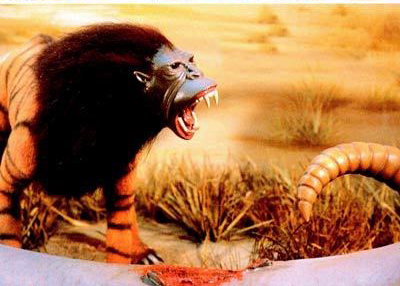
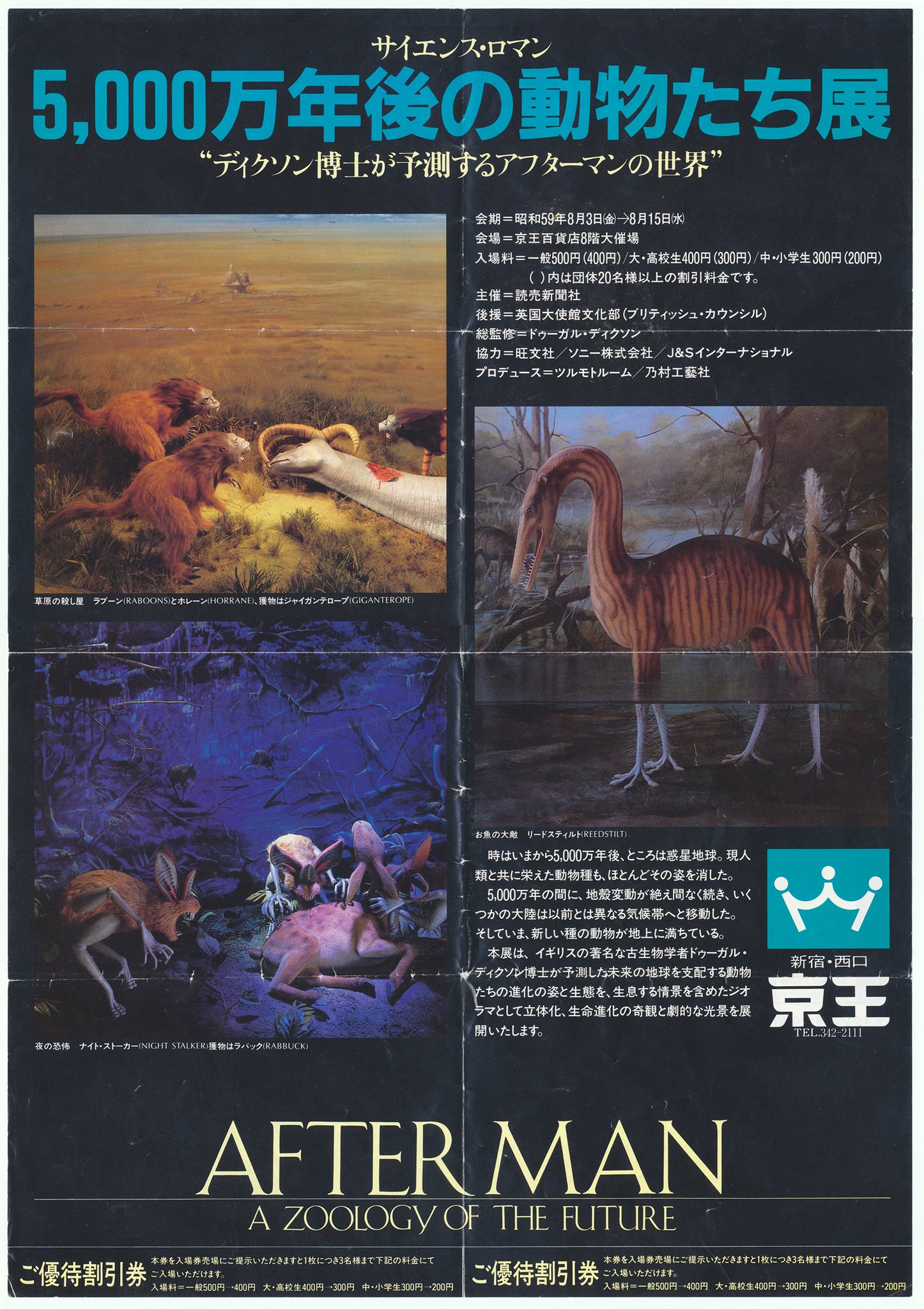 Promotional poster, Shinjuku Keio Department Store (front)
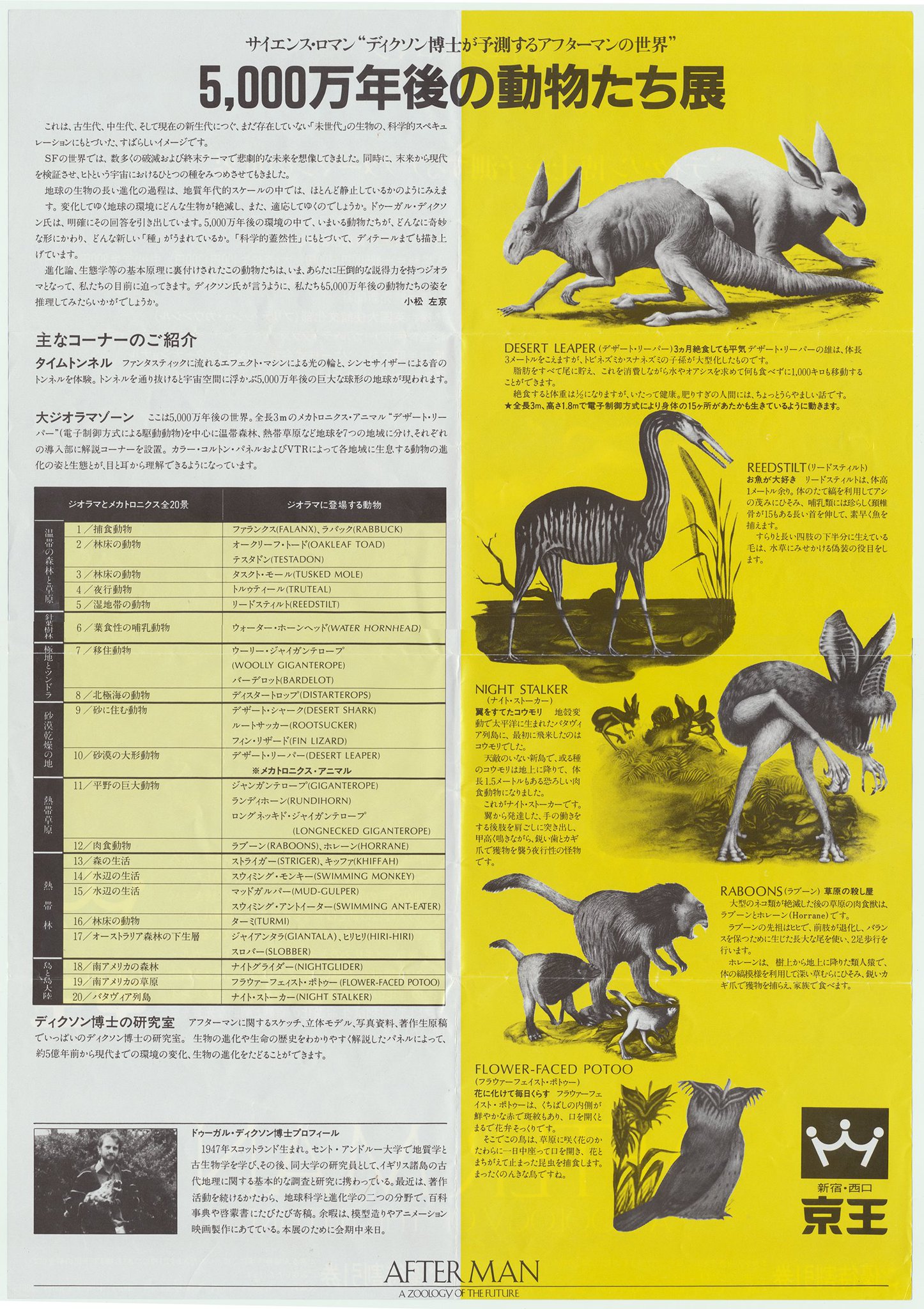 Promotional poster, Shinjuku Keio Department Store (back)
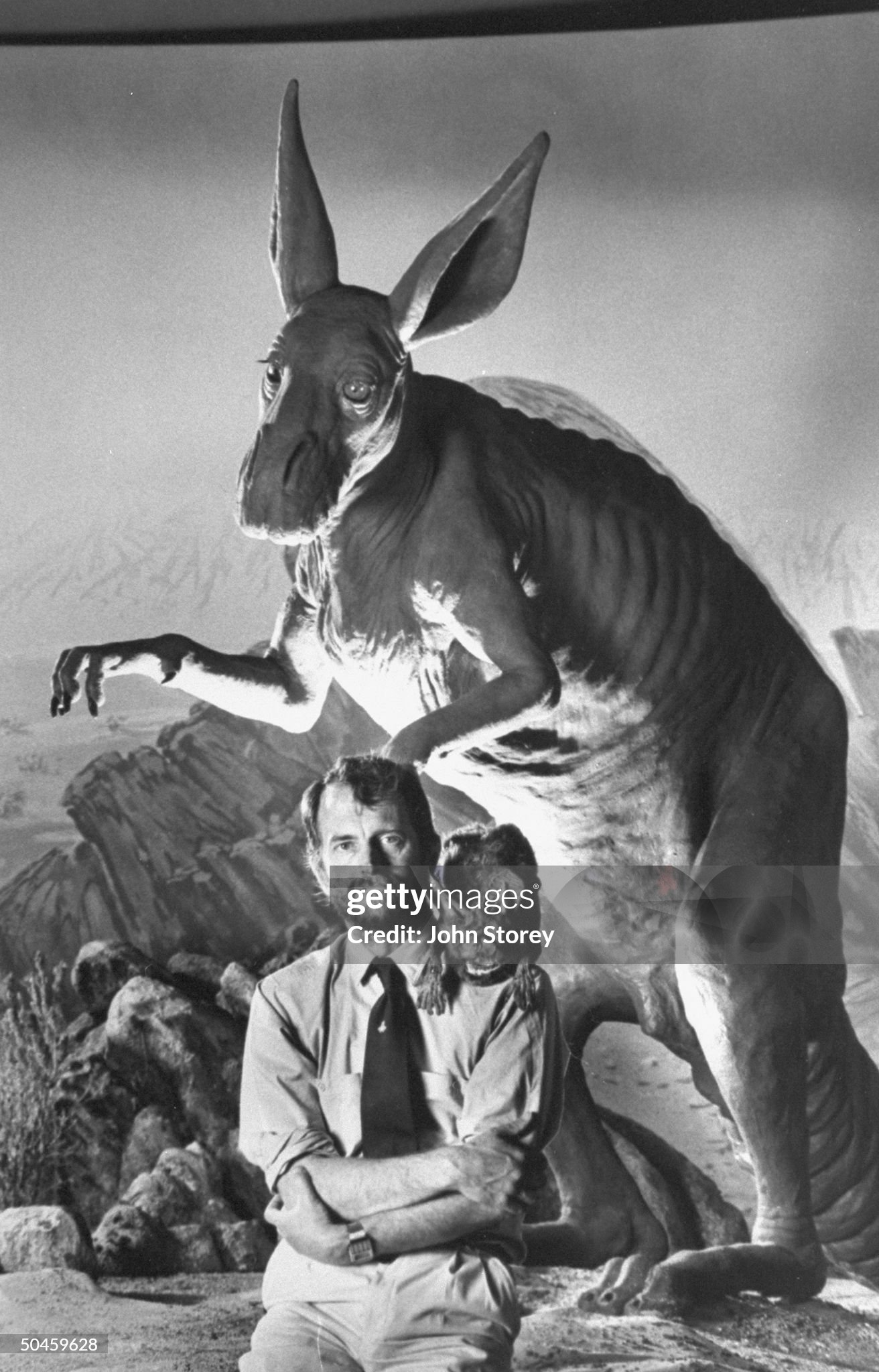 Dougal Dixon with the Desert Leaper animatronic and a Night Stalker puppet(?) draped on his shoulder, at the California Academy of Sciences
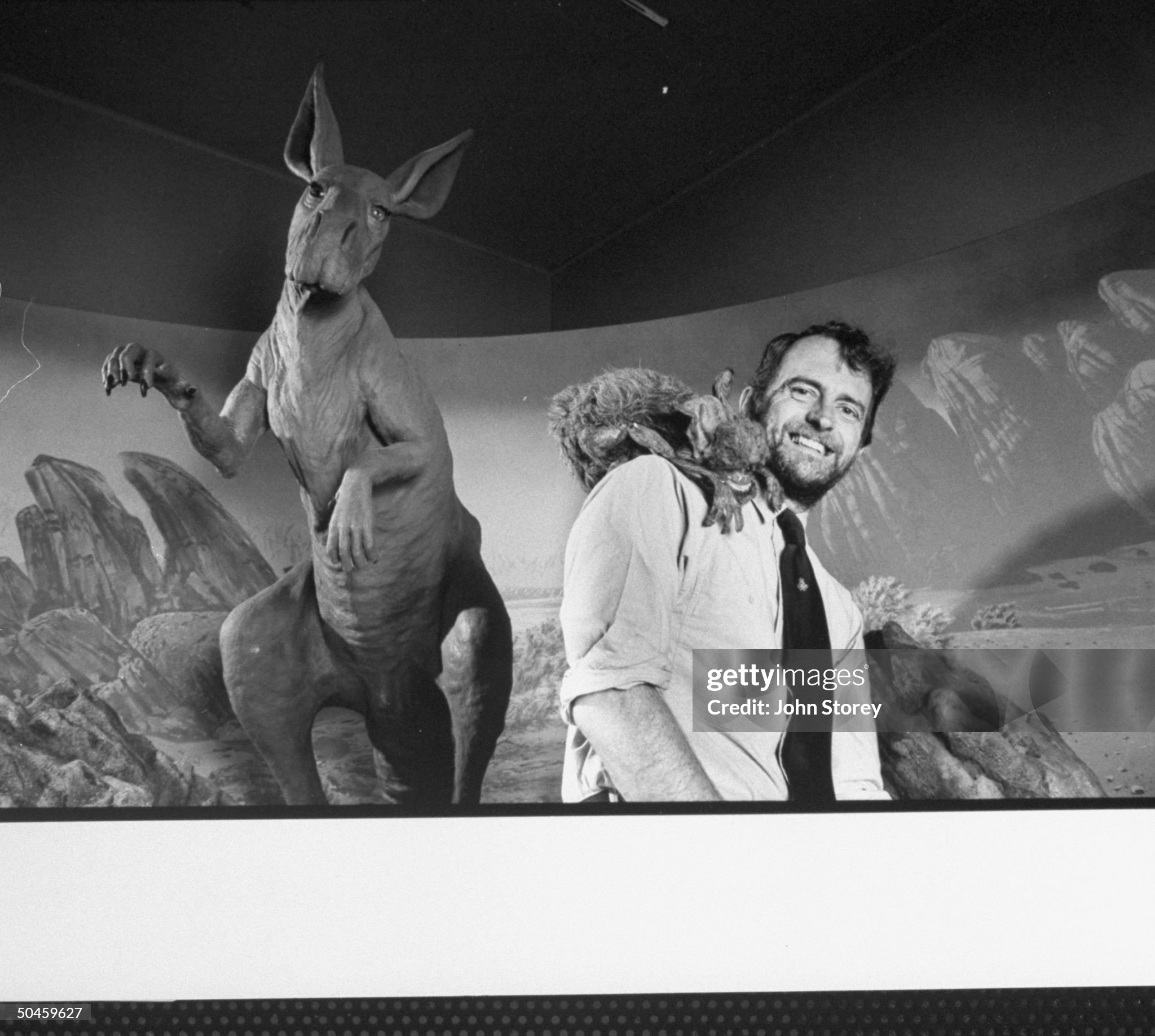 Dougal Dixon with the Desert Leaper animatronic and a Night Stalker puppet(?) draped on his shoulder, at the California Academy of Sciences