Snow Museum of Natural History
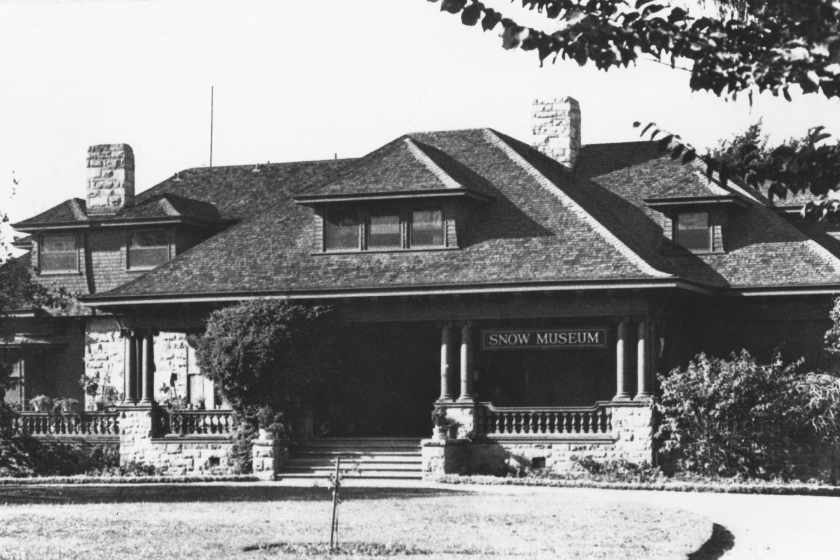
If this reads a lot like the Snow Museum's Wikipedia article, that's because I wrote it.
The Snow Museum of Natural History was a museum in Oakland, California, established by real estate speculator and big game hunter Henry Adelbert "Del" Snow (December 15, 1869 - July 28, 1927).1,2 Between 1922 and 1967, it was located in a mansion (right) next to Lake Merritt. These days, it's most well-known for being one of the ancestors of the Oakland Museum of California.
History
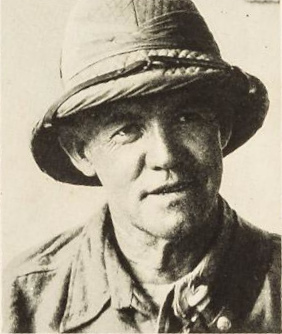
The history of the Snow Museum is inextricably tied to the life of proud Oaklander Henry Snow (left). Snow had been interested in natural history collecting since he was a child, collecting bird eggs from the marshes near his birthplace in Santa Cruz.3 At age 16, he ran away from home to join the U.S. Cavalry - and was shortly after kicked out for lying about his age.1 After that, he slowly amassed wealth through small business and real estate.3 He married Daisy Marguerite Langen in 1896.1 Throughout his adulthood, he continued to collect specimens, developing an eye for the natural world. Unlike other major natural history collectors of the early 20th century, however, Snow was not extremely rich: he had to partner with the City of Oakland to get enough funding for major expeditions.3
Snow and his buddy Leslie Simson left on the "Oakland Museum Expedition" in 1919 - an African safari financially backed by the City of Oakland.4,5 They spent the next two years in South and East Africa. Snow and his son Sidney filmed the expedition, shooting 125,000 feet of film and over 400 photographs.5,6 They came back in 1921 with a large collection of taxidermy animals (and two orphaned lion cubs).3 Snow and his son Sidney cut their footage into a film, Hunting Big Game in Africa with Gun and Camera.7 It was shown in theaters across the U.S. and Europe.3 Local theaters would cheer whenever the Oakland-branded vehicles rolled by.6
"I am for Oakland first, last, and all the time!"Henry A. Snow8
While Simson ended up donating his collection to the California Academy of Sciences in San Francisco, Snow wanted to keep his collection in Oakland. He offered to donate his collection to the city of Oakland, under the condition that they built a fireproof museum building to house them.8 The City was eager to agree, but put off construction of this new building.3,8,9 After Snow threatened to donate his collection to the California Academy of Sciences instead - a threat I doubt he ever intended to follow up on - Oakland relented and offered him the Cutting Mansion, located at the corner of 19th and Harrison Streets. The 30-room lakeshore mansion was formerly the residence of California fruit magnate Francis Cutting.10 The museum opened in this building in 1922.4,6
From 1922 to 1926, the museum housed a collection of live animals, cared for by Sidney Snow.4 These included the two lion cubs, an ostrich, a bobcat, and an anteater.3 One idea that was floated in 1924 was to build a 40-foot-deep cave to house larger animals, such as giraffes, hippos, lions, and rhinos - with only a moat separating them from the public. That was never built.6 Due to noise and space concerns, the animals were gifted to the City of Oakland and were moved to Sequoia Mountain Park (now Joaquin Miller Park) in 1927. Many of the animals died, as the city wasn't adequately equipped to take care of them. Sidney Snow petitioned to gain control of the animals back, and he founded the Alameda County Botanical and Zoological Society (now the Conservation Society of California) to help manage them. The live animal collection was then moved to Durant Park (now Knowland Park), and in 1939 opened as the Oakland Zoo.11
"The icebergs were beautiful but the walruses were disgusting."E.B. White, who joined the Snows on the Arctic expedition3
The Snows would continue adding to the museum's collections after the museum's opening. In 1923, Henry and Sidney Snow went on an expedition to the Arctic. This expedition was wild: they hung out with Roald Amundsen, found mammoth bones, attempted to hunt whales and nearly had their boats capsized in return, Henry Snow was charged by a Kodiak bear, and Sidney discovered four bodies lost during the Canadian Arctic Expedition. Alongside taxidermy specimens, they brought back a live polar bear named Wrangel, two Inuit visitors, and footage for another film: 1926's Hunting Big Game in the Arctic with Gun and Camera.3,6
As the collection grew, Henry Snow continuously sought to increase available space for it. In June 1923, newspapers announced that the City would build a new two-story building, but that fell through.9 Once he got back from the Arctic expedition in 1924, he once again petitioned the City of Oakland to build a fireproof museum building to house the collection and display it to the public. He raised $1 million for its construction and offered it to the city to cover construction costs. He enlisted Maury Diggs, architect of the Fox Theater, to design it.6 Snow even held a fundraising event, the "Jungle Movie Ball", at the Oakland Auditorium on December 9, 1924; this involved a screening of Hunting Big Game in Africa and a beauty contest.9 Oakland's city attorney deemed this fundraising illegal, however, and put the kibosh on that plan.6 Mayor John L. Davie finally managed to appropriate $200,000 for a museum building in 1925, but the City Council reclaimed those funds and spent it elsewhere.9
"I don't feel as if [the animals] are dead because they have been so well preserved and can remain that way for ages if properly cared for."Nydine E. Latham8
Henry Snow died from blackwater fever in 1927.8 His daughter Nydine E. Latham (nee Snow) took over management of the Snow Museum after that.4,8 She instigated the construction of habitat dioramas and continued adding to the collections primarily via salvage. She tried to keep the museum relevant by partnering with local institutions, offering engaging tours for children, and holding an "Animal Fashion Show", where the taxidermy animals were dressed in designer clothing.
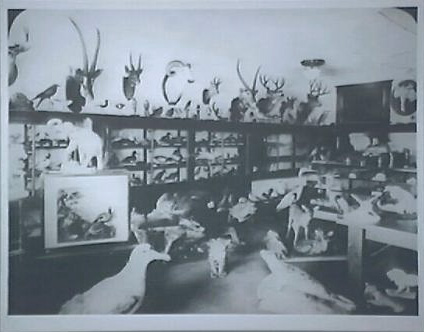 But as time went on, the museum lost popularity and began to be seen as old-fashioned: people called it "an ancient firetrap" and "a cultural blight on the city".3 Despite this, it remained a popular destination for teachers to take school children.10 Over the years, the mansion's 30 rooms ended up quite cluttered and disorganized (left).12
In 1954, the Snow Museum formed an association with the Oakland Art Gallery and the Oakland Public Museum, with the intent of potentially uniting the three institutions under one roof.12,13 The Oakland Art Gallery, which started off with leftovers from the 1915 Panama-Pacific International Exposition,3 was housed in a space inside the Oakland Municipal Auditorium on 12th Street. The Oakland Public Museum, housed in a Victorian-style mansion built in the 1870s, was located at 1418 Lakeside Drive, and its collections focused on Native American objects and New England antiques.3,12 The idea was for the new building to have separate wings for the art, history, and natural history collections. Unlike the dank older buildings, the new museum would be open and inviting, encouraging the community to come together instead of appealing to just the museum-going elite. This proposition was supported by Oakland business groups, socialites, the Oakland Art Gallery, and Nydine Snow. By this point, the Snow Museum was becoming derelict, and some of the taxidermy animals were starting to fall apart. Oakland voters approved a bond in 1961 to raise money for this new combined museum, the Oakland Museum.3 Construction began in February 1964 and finished in 1968, and the Oakland Museum of California as we know it now opened in September 1969.12,13
"Visiting the old museum as a Cub Scout, I must admit that I found it dark, stuffy, and foreboding."William W. Sturm, 19969
In anticipation of the merge, the Snow Museum closed in 1967.4 The new museum's natural history exhibits would focus on California ecology, and would be populated by Snow's North American collections. The majority of the museum's Arctic and Africa collections were auctioned off through Butterfield and Butterfield.3,5,10 The egg collection was initially inherited by the Oakland Museum of California, but was transferred to the Western Foundation of Vertebrate Zoology in 1976.14 The old Snow Museum building was demolished in 1970.9 The City had floated building a large hotel in the spot, but local opposition put an end to those plans. The land is now occupied by Snow Park.15
Specimens
Specimens at the Snow Museum included:
- Albatrosses16
- Sable antelope16
- Giant armadillos3
- Kodiak bears
- Polar bears.17 These were arranged in a diorama, featuring a mother, cubs, and an advancing male3
- Blesbok18
- Cape buffalo4,18
- Buffleheads16
- Texas longhorn cattle horns3
- Cockatoos3
- Cougars8,16
- Deer antlers entwined in a death struggle3
- Black-tailed deer3
- White-tailed deer3
- Dik-dik18
- Common duiker18
- Golden eagles3
- African elephants18
- A baby Asian elephant that died en route from Thailand to the Texas Centennial Exposition3
- Gazelle3
- Gemsbok18
- A gila monster collecting by Nydine's daughter Phyllis during her honeymoon3
- Reticulated giraffes18
- Gorillas3
- Coke's hartebeest18
- Lichtenstein's hartebeest18
- Herons16
- Hippopotamus18
- Horses3
- Impala18
- Klipspringer18
- Leopards9,18,3
- African lions9,17,18
- Mallards16
- Moose3
- Musk oxen, acquired via a trade with the American Museum of Natural History3
- Nyala4
- Orangutans3
- Peafowl17
- Plovers16
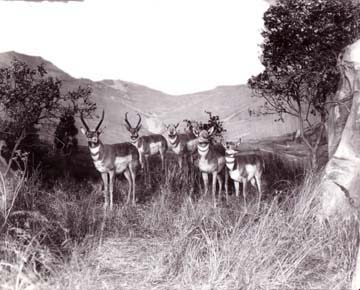
- Pronghorn (right)8
- Reedbuck18
- Black rhinoceros18
- White rhinoceros.18 One of them was a baby. They were intended to be displayed as a family group, but they didn't fit in the building.5
- Ringtail16
- Serval18
- Dall sheep16
- Snakes9
- Springbok18
- A swan from Lake Merritt that was beloved by the public prior to its death3
- Walruses3,18
- Common waterbuck18
- Sing-Sing waterbuck18
- 12 sperm whale teeth3
- Black wildebeest18
- Blue wildebeest18
- Burchell's zebra18
- Chapman's zebra18
- Grevy's zebra18
Only a small portion of this was actually on display - 25 tons' worth of specimens sat in storage, including the animals that were too large to display in the mansion.8 By the museum's closing, there were 65 habitat dioramas, wall mounts, display cases, and a "Cave Room" - which featured a miniature display of a woolly mammoth killing a caveman.3 Alongside the taxidermy collection, the Snow Museum had a collection of 50,000 bird eggs,8 pinned insects,1 skulls, models of animals,16 mounted fish, plant parts, historical artifacts,3 and a petrified log.9 The museum's specimens were available to rent.17 Among the items auctioned off in 1969 were a field toilet, an oil painting by William Keith, and a box full of abnormal tree branch growths.3
Gallery
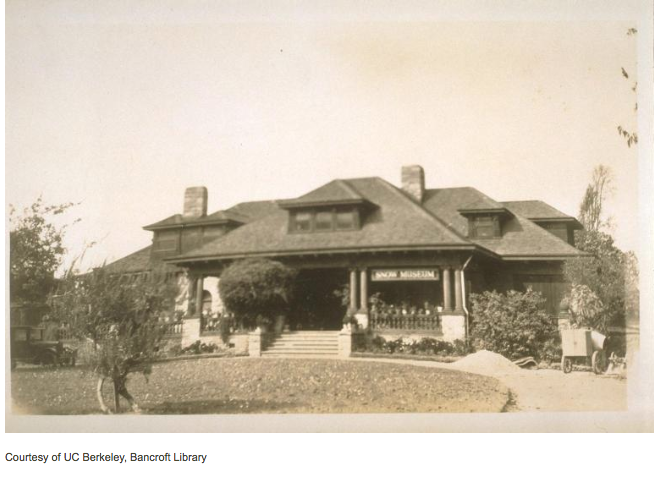
Exterior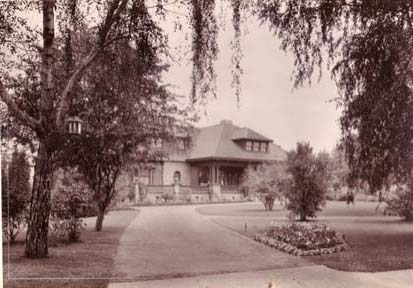
Exterior, from a little further away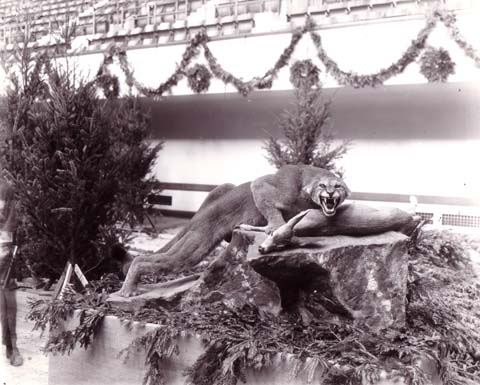
Snow Museum mountain lion, presumably on rent in an auditorium10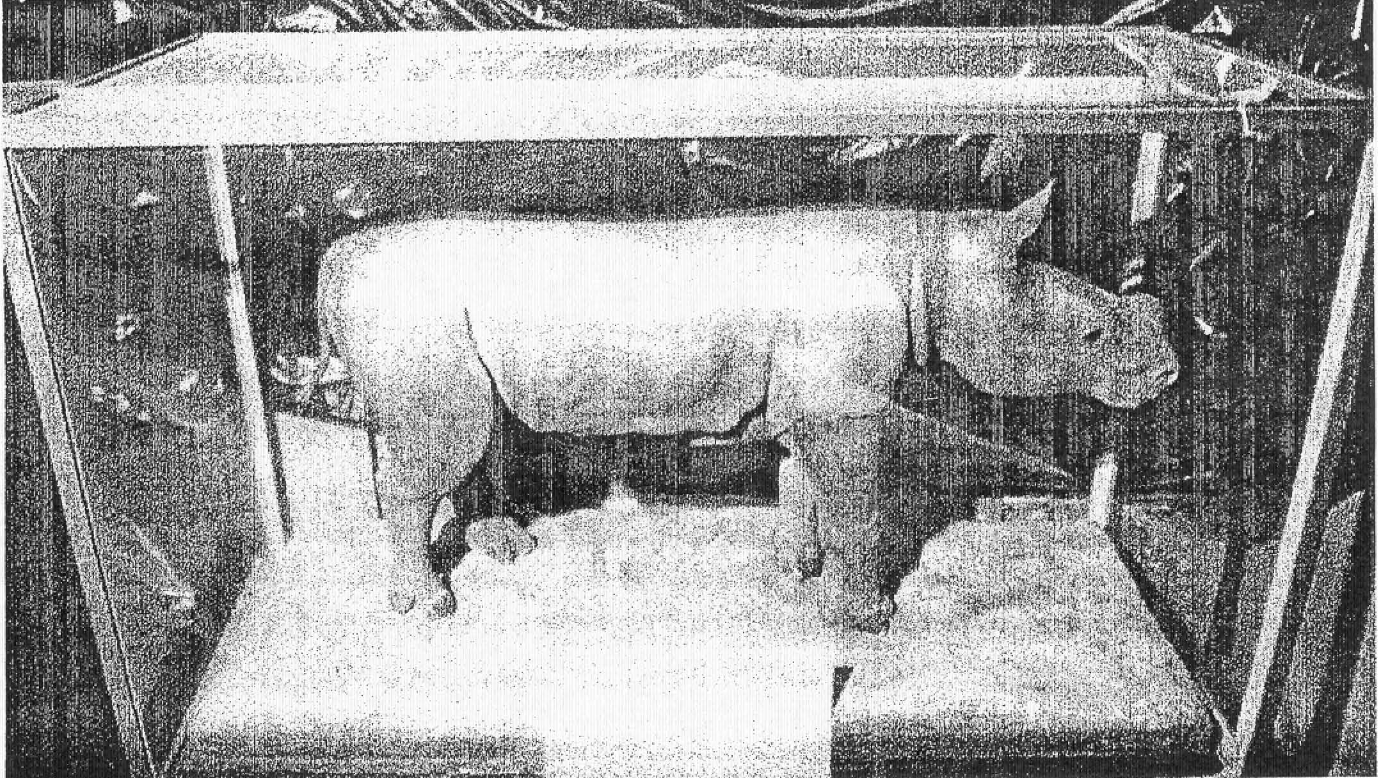
Baby white rhinoceros shot by Henry Snow. This specimen is still in the collections of the OMCA as of 2001.5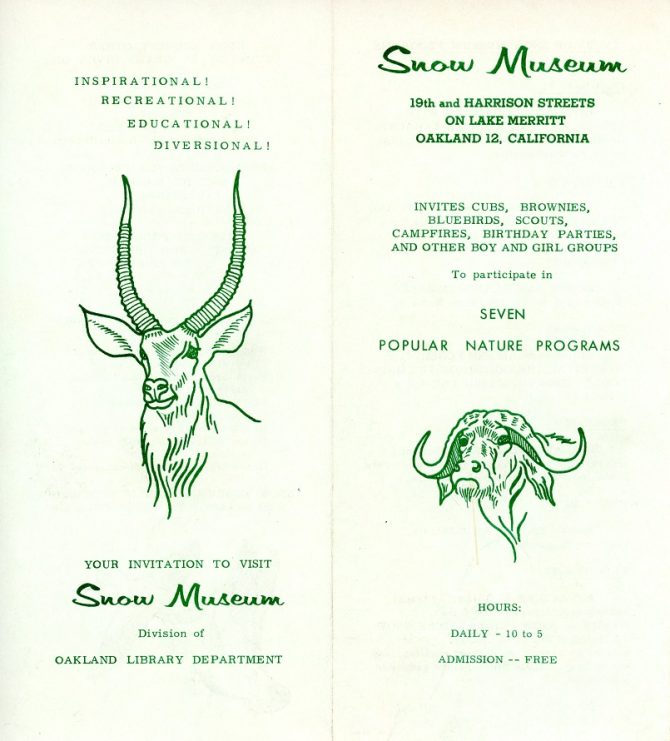
Brochure
Courtesy Oakland Public Library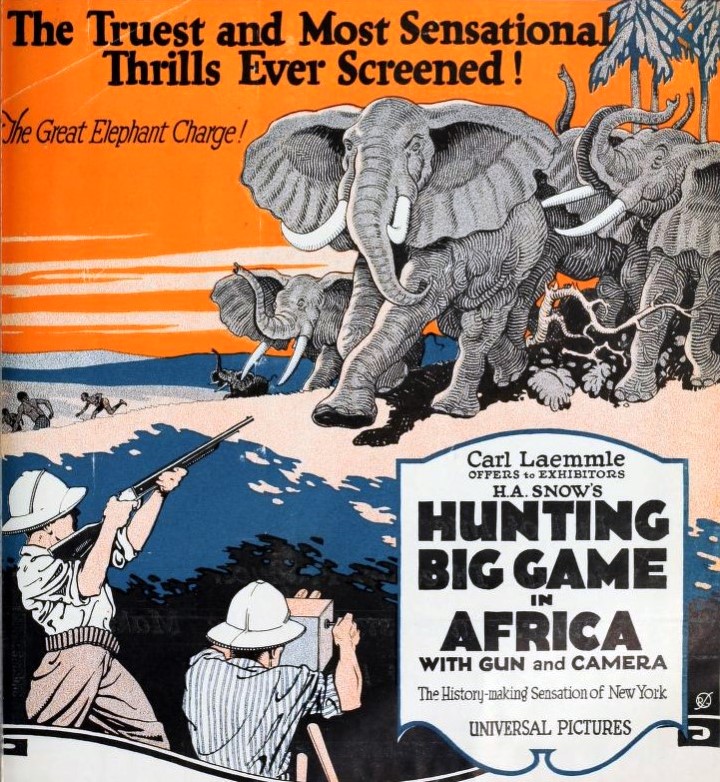
Poster for Hunting Big Game in Africa with Gun and Camera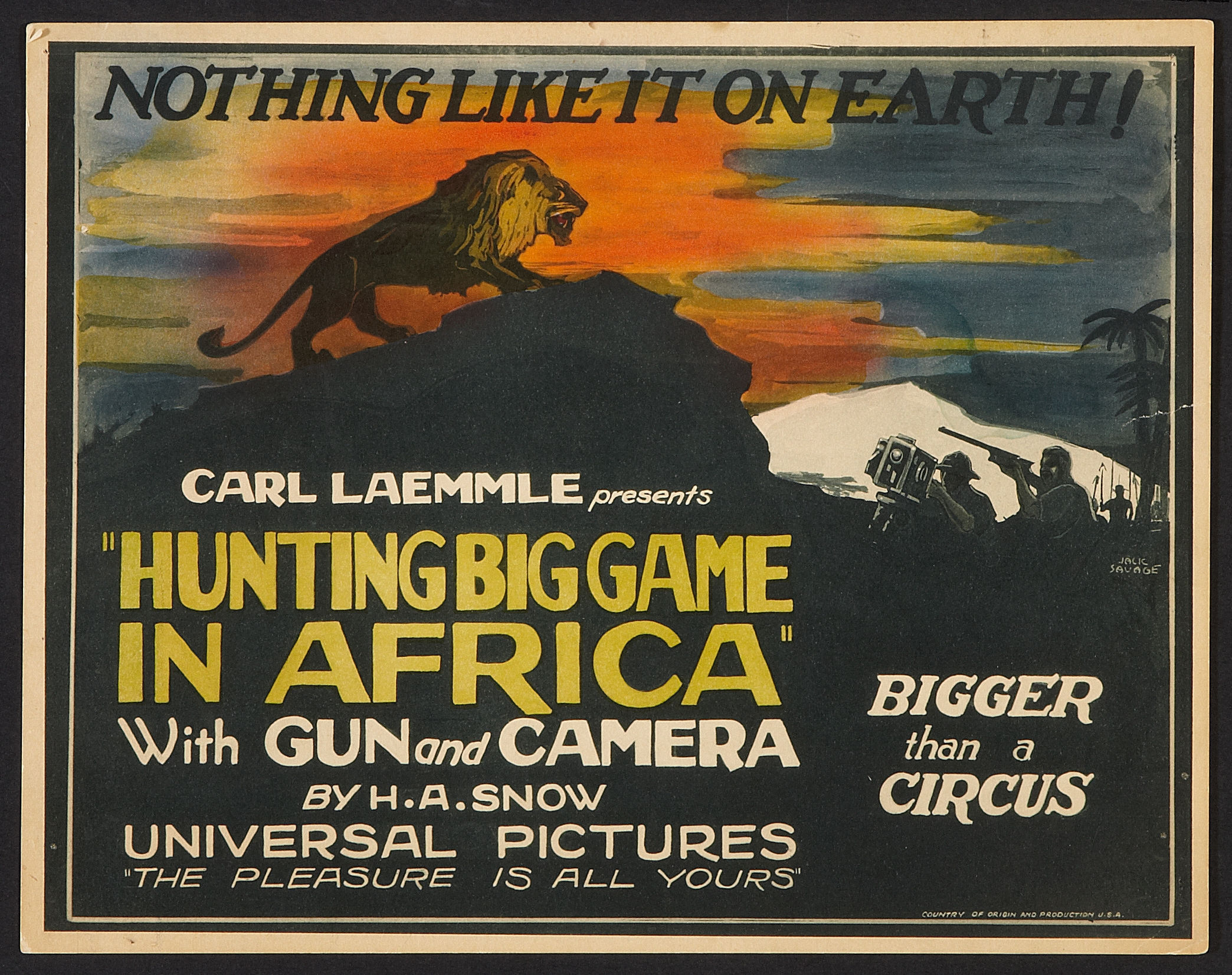
Lobby card for Hunting Big Game in Africa with Gun and Camera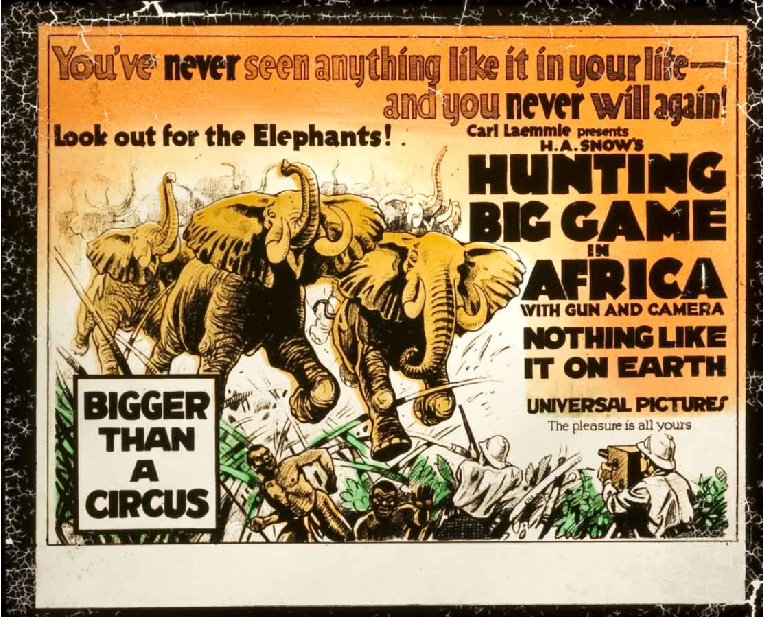
Lobby card for Hunting Big Game in Africa with Gun and Camera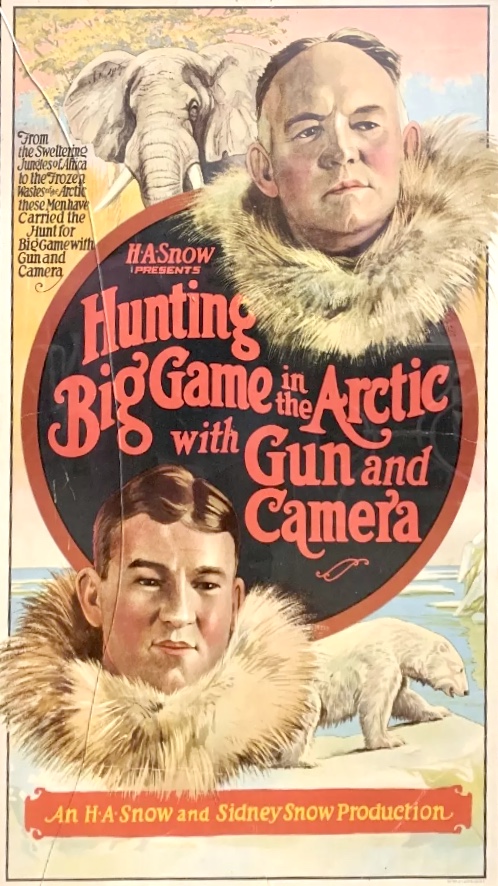
Poster for Hunting Big Game in the Arctic with Gun and Camera
References
- "Henry A. Snow". Oakland Wiki.
- "H. A. Snow dies here in wife's arms". Oakland Tribune July 28, 1927: 1.
- Schwarzer, M. (2010). "Butterflies in the Basement: Requiem for the Snow Museum of Natural History". In: Dion, M. (ed.). The Marvelous Museum: Orphans, Curiosities and Treasures. Oakland Museum of California.
- "Snow Museum of Natural History Records, 1917-1962". Oakland Public Library.
- Rookmaaker, K. (2000). "The alleged population reduction of the Southern White Rhinoceros (Ceratotherium simum simum) and the successful recovery". Saugetierkundliche Mitteilungen 45(2): 55-70.
- Mailman, E. (2011). "11 Goners: The Lost Things of the East Bay". Oakland Magazine.
- McKinley, E.H. (1974). The lure of Africa: American interests in tropical Africa, 1919-1939. Bobbs-Merrill.
- Mailman, E. (1999). "Hearts replaced by sawdust". The Montclarion December 7.
- Sturm, W.W. "The Snow Museum". Oakland Heritage Alliance News 16(2): 20.
- "Snow Museum". Oakland Wiki.
- "History". Oakland Zoo.
- Allen, A. (2010). "A history of the Oakland Museum of California". East Bay Times.
- "About the collection". Oakland Museum of California.
- Kiff, L.F. (1978). "Probable black rail nesting record for Alameda County, California". Western Birds 9(4): 169-170.
- Allen, A. (2010). "The Story of Oakland's Snow Park". East Bay Times.
- Photograph by M.S. Stewart, Oakland Museum of California collection
- "Art on Demand". Life Magazine October 4, 1963: 7.
- Waiczis, M.R. (1983). "Henry A. Snow and the Snow Museum of Natural History". Oakland Museum.